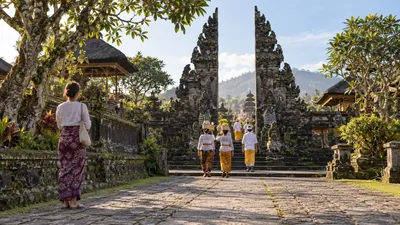
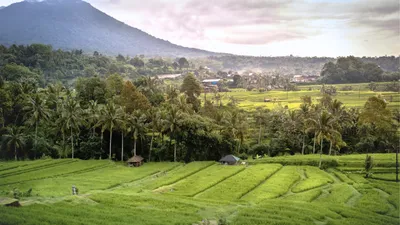
Melukat is a Balinese Hindu purification tradition involving tirta, or consecrated water. Visitors should approach it as a religious practice, not a wellness treatment or a uniform tourist activity. Whether visitors may participate, which steps they follow, and what it costs depend on the site and local religious guidance.
I visited Taman Beji Griya and Pura Tirta Sudamala in May 2025. Those experiences describe my visits at that time; they do not establish today’s access rules or a procedure to copy elsewhere.
What Melukat means
The Bali government’s cultural heritage record describes malukat as a Hindu tradition of spiritual purification using sacred water, with the ritual performed according to religious practice rather than at arbitrary locations. Indonesia’s national tourism site also emphasizes that the ceremony varies with the village, temple, purpose, and instructions of the priest. There is no single sequence that applies at every spring, temple, beach, or family ceremony.
At Tirta Empul, for example, two spouts are reserved for rites connected with death and are not used for ordinary Melukat. The correct sequence and any restrictions should come from the priest, temple staff, or an approved guide at that site, not from a generic checklist.
Melukat Sites I Visited
Taman Beji Griya
At Taman Beji Griya, I paid an entrance fee and was accompanied by a guide. The guide showed me where to place the canang offering and led me through the waterfall sequence. The site offered to film me and sold additional activities. I chose not to be filmed because I wanted to focus on the ritual. I found the experience too commercial for what I wanted from Melukat, and I would not recommend it for someone seeking a quieter purification experience.
That is my assessment of one visit, not a judgment about the religious practice. Do not assume the same guide, itinerary, inclusions, or prices are available now.
Pura Tirta Sudamala
At Pura Tirta Sudamala, I made a donation and bought offerings, and a guide helped me through the visit. At the end of each visit, I was given blessed water poured from a clay vessel into my hands to drink. Both sites had lockable metal lockers when I visited.
If you want to find the place I visited, start with this Pura Tirta Sudamala map pin. Confirm the entrance, visitor access, and current hours before you travel there.
That was my experience, not a universal instruction to drink ritual water, bring a particular offering, or expect lockers at other temples. Follow the officiant’s directions and ask what is appropriate at the site you visit.
Check access before you go
Bali’s provincial Circular Letter No. 7 of 2025 tells foreign tourists to respect temple sanctity, ceremonies, and local rules; it also directs visitors to use a licensed guide at tourist attractions and follow each attraction’s specific rules. It restricts entry to certain sacred temple zones to people attending worship in Balinese attire and includes a menstruation-related restriction for sacred areas.
Because sacred-zone rules and visitor arrangements are specific to each site, confirm whether foreign visitors may enter the ritual area and participate before traveling there. My May 2025 visits do not prove that access is currently allowed under the same conditions. Do not enter a restricted area or join a ritual unless the temple’s religious authority or staff explicitly says you may.
Before booking or arriving
Contact the site or a licensed local guide and ask:
- Are visitors currently allowed to observe or participate, and which areas are open?
- Is a guide required, and does the guide have the relevant license and site permission?
- What are the current entry fee, ritual fee, offerings, clothing rental, and optional add-on costs, in rupiah?
- What clothing is required, and are sarongs available to rent?
- What is the site-specific ritual sequence, and are any water spouts or areas restricted?
- Are changing facilities and lockable storage available?
- Are there photography rules, including rules for filming the ritual or other people?
Use the site’s stated price rather than relying on old USD estimates or an assumed donation. A temple entry ticket may not include access to a purification pool or participation in a ceremony. Opening hours, entry arrangements, ritual availability, and costs can change; reconfirm close to your visit, especially when planning for Q4 2026.
Clothing, photography, and shared spaces
Wear modest clothing and follow the temple’s requirements. Shorts may be barred in some areas; ask whether a sarong is required and whether one can be rented. Some purification sites have shared bathing areas. If privacy matters to you, ask about the layout and changing arrangements before deciding whether to take part.
Keep your phone and camera away unless photography is permitted. Ask before filming individuals, and never interrupt prayer or a ritual to get a shot. Each site’s rules take priority.
Ritual water practices also vary. At another ceremony the officiant may direct a different use. Follow that site’s religious authority rather than applying a blanket instruction from a travel article.
Is Melukat right for your trip?
If you are curious, first learn what the site allows and what the ritual means to the people who practice it. Choose a visit where local religious authorities control participation and instructions. If access is restricted, observe only from an area open to visitors or choose another cultural activity.
The experience does not promise emotional release, healing, or a particular spiritual result. People may interpret a ceremony in different ways; a travel guide should not prescribe what you ought to feel.