Bali's rice fields still run on a thousand-year-old water system
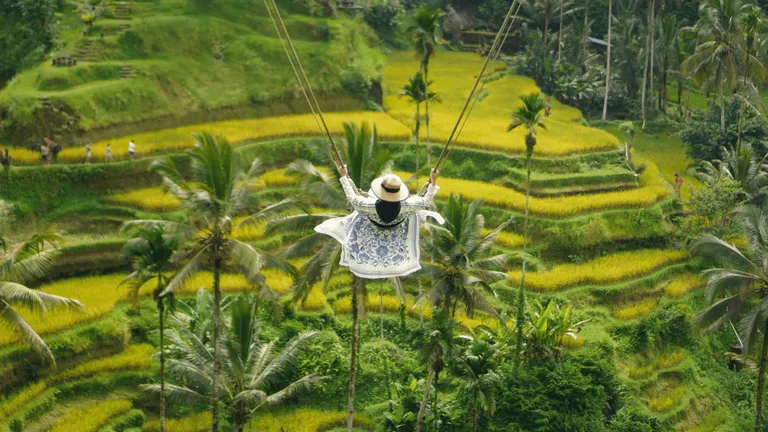
Subak is a network of farmers, canals and water temples that has irrigated the island for roughly a thousand years. UNESCO lists it as world heritage.
Those palm-leaf boxes on every sidewalk are daily offerings
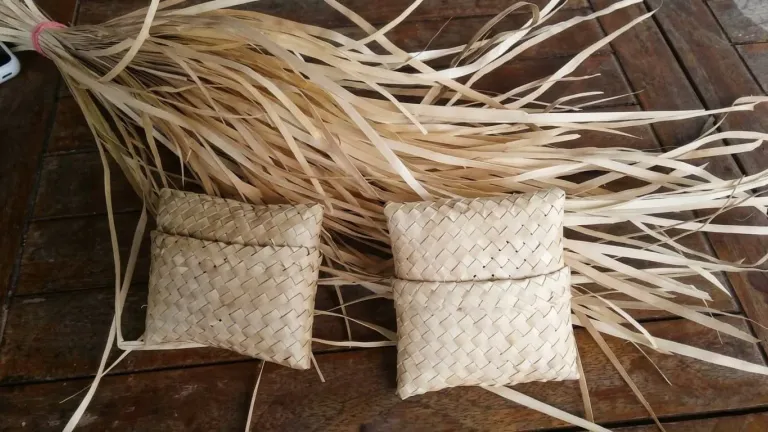
They are called canang sari, and Balinese Hindus make them fresh every day for the shrines. Watch your feet: step around them, never over them.
The kecak fire dance was invented in the 1930s
It looks like an ancient ritual, but the Ramayana spectacle took its modern form in the 1930s. The entire orchestra is a circle of chanting men, no instruments.
One of the world's rarest cloths is woven in one Bali village
Geringsing from Tenganan is a double ikat, a technique practiced in only three regions worldwide: Bali, India and Japan. The village is the only source in Indonesia.
This village does not bury or cremate its dead
In Trunyan, on the shore of Lake Batur, the dead are laid to rest in the open air rather than buried or cremated.
Monsters patrol the streets the night before Nyepi
Ogoh-ogoh are monstrous effigies built to flush out evil spirits. Villages parade them on Nyepi's eve, then burn most of them before the island falls silent.
Every temple in Bali has two birthdays a year
The Pawukon calendar runs just 210 days, so each temple's anniversary, called odalan, comes around twice in a Gregorian year. A ceremony is never far off.
A gamelan is deliberately tuned out of tune
Instruments are built in pairs, tuned slightly apart on purpose. The famous shimmer is the sound of the two tunings beating against each other, like a heartbeat.
Wayan, Made, Nyoman, Ketut: names that are birth orders
Many Balinese names simply state where you sit among your siblings. Wayan is the firstborn, then Made, then Nyoman, then Ketut.
Toward the mountains, toward the sea: how Bali gives directions
Kaja means toward the mountains and kelod toward the sea. Because the island sits between them, both words point a different way depending on where you stand.
Every Galungan, the streets grow a forest of bent bamboo
Penjor are tall arched bamboo poles raised for Galungan, bent at the tip and hung with woven coconut-leaf offerings. They line streets across the whole island.
Bali had its own tiger. It is gone.
The Bali tiger was hunted until none were left. The last confirmed records come from the late 1930s, and no specimen has surfaced since the war.
Bali's kings chose death over surrender to the Dutch
In 1906 the royal court of Badung marched in silence into Dutch gunfire rather than surrender. The puputan, repeated in 1908, ended Bali's independence.
Cross one strait and the wildlife turns Australian
The Wallace Line runs through the Lombok Strait beside Bali. Its wildlife is Asian, but on Lombok, just across the water, species start looking Australian.
Agung's lava flowed around Bali's holiest temple in 1963
When Mount Agung erupted in 1963, lava flows stopped short of Pura Besakih, sometimes by only meters. Many Balinese read the temple's survival as a sign.
Batur is a crater inside a crater
Mount Batur rises inside a rare double caldera, a crater within a crater, cradling a crescent-shaped lake and natural hot springs on its shore.
Fancy the sunrise trek? Read the Batur guide →
Bali's only endemic bird was nearly lost forever
The Bali starling is the island's only endemic vertebrate. It collapsed to near extinction in the wild, and sanctuaries in West Bali and on Nusa Penida keep it alive.
Interested in Bali's starling? Read the West Bali guide →
Once a year, the whole island shuts down for a day
Nyepi, the Balinese Saka new year, silences everything for 24 hours: no flights, no traffic, no lights. Even the international airport closes.
Travelling around Nyepi? Read what to plan for →
The local language keeps three levels of politeness
Between strangers, most people speak Indonesian. The Balinese language, with its three separate politeness levels, is saved for family, village and temple.
The temple on your 50,000 rupiah note is real
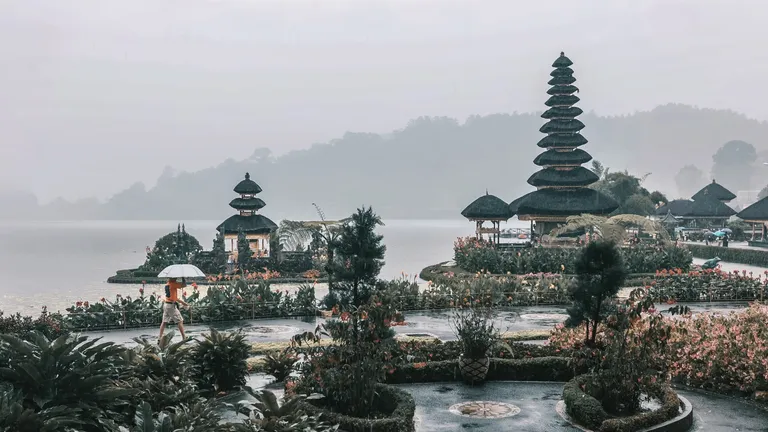
Turn over a 50,000 rupiah note: the lake temple on the back is Ulun Danu Bratan in Bedugul, and yes, you can visit it.
Temples have a dress code, and the gate rents the outfit
Cover shoulders and knees, and tie on a sarong and sash before entering a temple. Sarongs are usually available for rent at the gate.
Visiting a temple? Read the ceremony primer →
Two of the holy spouts are not for the living
At Tirta Empul's purification pool, the last two spouts are reserved for funeral rites. Watch the locals: they skip them, and so should visitors.
Curious about purification? Read the melukat guide →
Some lawar contains an ingredient few menus mention
Lawar mixes chopped vegetables, grated coconut, spices and meat. Traditional red versions add fresh pig's blood, so it is worth asking before you order.
Ordering lawar? Read the street food safety guide →
Bali's satay wraps fish around a lemongrass stalk
Sate lilit takes minced fish and grated coconut, wraps them around a lemongrass stalk, and grills them. It is Bali's own answer to satay.
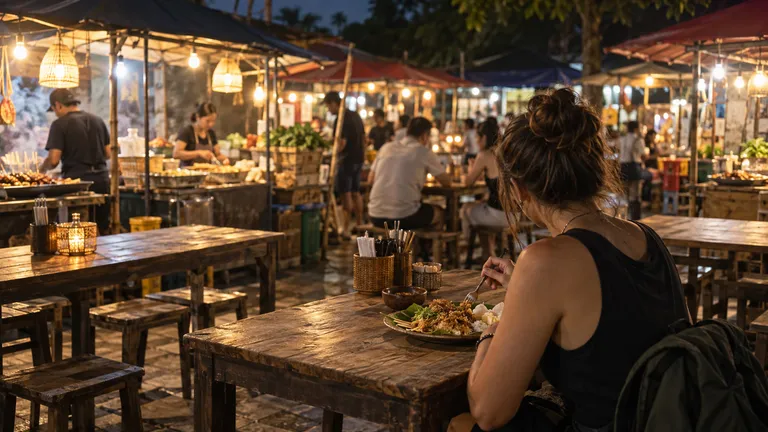
Hungry? Bali night markets, a solo dining guide →
Bali's rice fields still run on a thousand-year-old water system
Subak is a network of farmers, canals and water temples that has irrigated the island for roughly a thousand years. UNESCO lists it as world heritage.