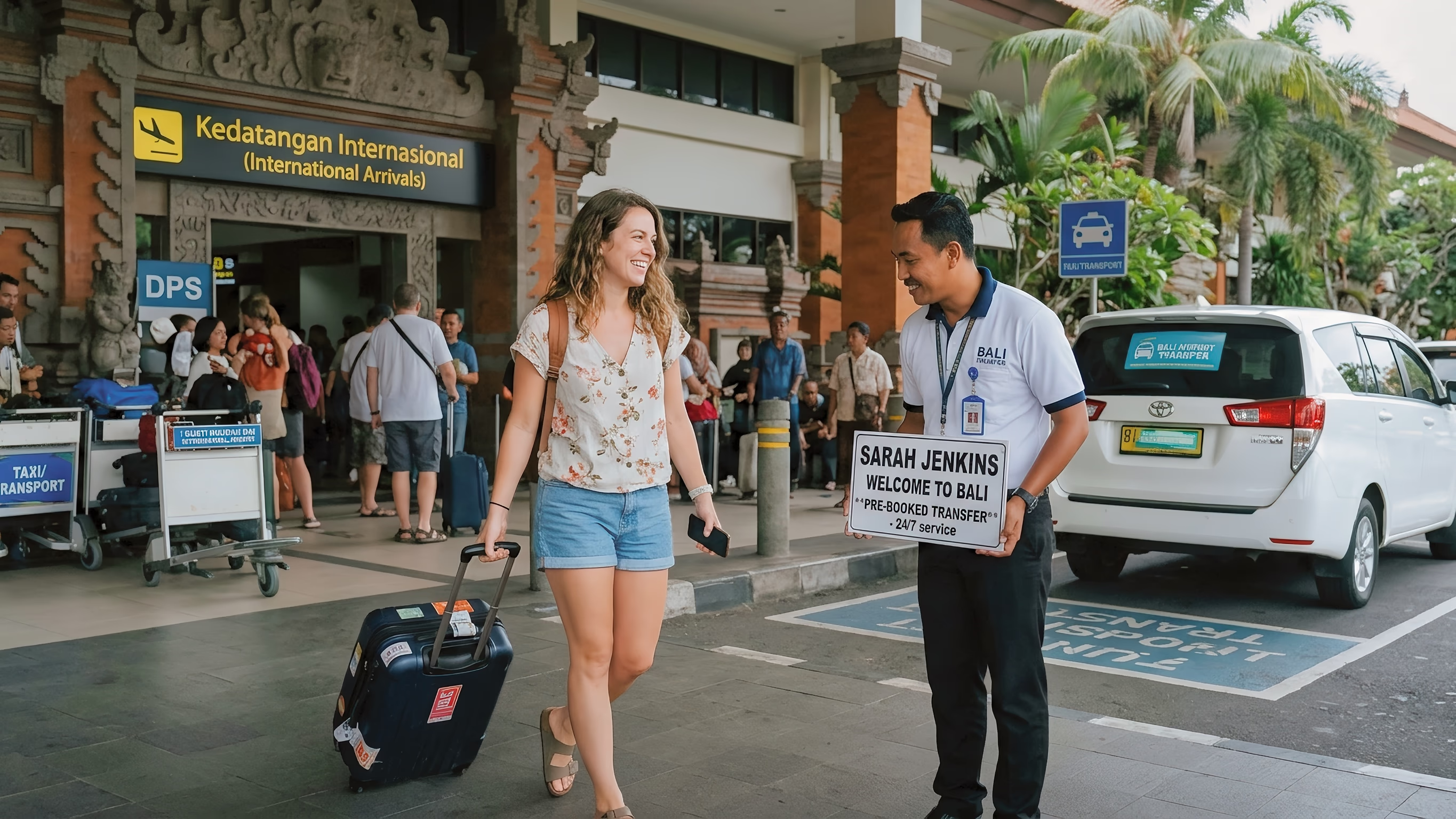
For a first solo trip to Bali, I would spend 14 days in two bases: Sanur first, Ubud second. Sanur makes arrival easier, with a walkable beachfront, varied food, and boats to Nusa Penida nearby. Ubud gives you a slower second week. This guide covers the costs, arrival steps, and cultural rules that make that plan work.
Who Is This Guide For?
This is not a guide for the traveler who wants to tick twelve destinations in ten days. It is for the solo traveler who wants to actually experience Bali at a human pace.
This route gives you beach time, food, culture, and nature without a hotel change every few days. If those are your priorities, use it as a starting point and adjust the nights to suit your interests.
If your main interest is nightlife, diving, or a resort stay, keep the arrival and etiquette advice but choose a base that fits that trip.
When to Visit Bali
Bali is generally drier from about April to October and wetter from about November to March, with year-to-year variation. The best month depends on the activities you want and the forecast for your dates.
Dry Season: April to October
These months generally offer better odds for beach days and hikes, though rain is possible. Popular places and accommodation can be busier during holiday periods, so compare dates rather than assuming every dry-season week is equally crowded or expensive.
Late August is my favorite. On my visits it has usually felt cooler, with sunshine and only occasional rain. BMKG explains that dry winds from Australia can make Bali feel cooler during the July to September dry-season peak. Weather and crowds still vary by year, so treat this as my preference, not a promise for your dates.
Shoulder Season: April to June and September to October
These months can offer a useful balance of weather and crowd levels, but compare the actual hotel rates for your dates. October is a transition month, not a guarantee of dry weather.
Wet Season: November to March
Rain can interrupt beach days, boat trips, hikes, and roads, while temples and food stops are easier to rearrange. The start of the wet season shifts. In September 2026, BMKG forecast the 2026–27 rainy season starting in November for parts of Bali and December for much of the island. I tend to avoid planning a weather-dependent first trip from late October onward, but check the latest local forecast rather than relying on a fixed calendar date.
Nyepi: the Day of Silence
Nyepi is the Balinese Hindu New Year. The 2026 provincial notice stopped ordinary travel and flights for 24 hours and asked mobile providers to suspend data service while preserving emergency communication. It did not establish that every hotel’s Wi-Fi would be off. Check the published arrangements for the year you travel; do not book a flight or boat crossing during the closure.
In a March 2026 traveler discussion shared with Wandopia, some guests reported hotel meal packages and working Wi-Fi, while others advised buying supplies ahead of time. These are individual reports, so ask your accommodation before booking which meals are included, whether its restaurant operates, whether Wi-Fi is expected to work, and how check-in and check-out are handled. Buy enough drinking water, food or snacks, and any medication you need before Nyepi begins. Indonesia’s tourism guidance advises guests to stay indoors, keep light and noise low, and prepare for itinerary changes. Follow your host and the local pecalang.
Month-by-Month Summary
These are broad seasonal patterns, not a forecast or hotel-price guide. Check weather and accommodation rates for your exact dates.
| Month | Planning note |
|---|---|
| January | Allow flexible outdoor days during the wetter season. |
| February | Keep a rain backup for beach and boat plans. |
| March | Check the Nyepi date and the published transport closure. |
| April | Rain often eases, though the transition varies. |
| May | Often a useful mix of drier weather and flexible plans. |
| June | Book popular activities ahead if your dates are fixed. |
| July | Compare hotel rates early during school holiday travel. |
| August | My favorite is late August, though conditions vary. |
| September | Check sea conditions for diving and boat trips. |
| October | Treat it as a transition month and check the forecast. |
| November | Wet-season onset varies by area and year. |
| December | Plan for rain and compare holiday-period hotel rates. |
How Long Should You Stay?
Seven days sounds reasonable until you factor in Bali’s traffic. A 20-kilometer drive from Canggu to Seminyak at the wrong hour can take 90 minutes. Getting from the south to Ubud on a Saturday afternoon is its own small adventure.
10 days: The practical minimum to genuinely experience two areas without feeling rushed.
14 days and 13 nights: A good first-trip plan. Spend seven nights in Sanur and six in Ubud, or reverse the split if you prefer more inland time. You get room to settle into each place without constant transfers. The budget below uses 13 paid hotel nights.
30 days or more: Compare a monthly hotel rate, serviced apartment, and coliving space. The cheapest or most social option depends on your dates, work needs, and neighborhood.
One principle I apply to every Bali visit: choose fewer destinations. East Bali, north Bali, the Gili Islands, and Nusa Penida are worth considering, but adding all of them to a first trip makes transport dominate the schedule. Start with two bases and add a side trip only if it serves your interests.
What Does 14 Days in Bali Cost?
Plan around Rp 17,810,000 (about US$994) for this example 14-day, 13-night trip, before international flights, visa, the Bali tourist levy, and travel insurance. This is a planning worksheet with explicit assumptions, not a hotel or transport quote. Compare live prices for your exact dates.
The approximate dollar figures below use Bank Indonesia’s 25 September 2026 rate of Rp17,917 per US$1, rounded to whole dollars. Your card or cash exchange rate may differ.
Swipe across the table to see all columns.
| Expense | Assumption | Trip total | Approx. USD |
|---|---|---|---|
| Accommodation | Rp900,000 per night for 13 nights | Rp11,700,000 | US$653 |
| Food | Three paid meals a day at Rp55,000 each | Rp2,310,000 | US$129 |
| Local transport | Rp150,000 a day for rides and transfers | Rp2,100,000 | US$117 |
| Activities | Allowance for paid entries or a couple of tours | Rp1,000,000 | US$56 |
| Incidentals | Rp50,000 a day for snacks, water, and top-ups | Rp700,000 | US$39 |
| Illustrative total | Adjust each line to your style | Rp17,810,000 | US$994 |
The room allowance works out to about US$50 a night and is not an offer from a particular hotel. For a clean meal with meat and vegetables, I use Rp40,000–70,000 (about US$2–4) as a reference; bottled water is sometimes included. A 500 ml bottle of water can cost around Rp4,000 (about US$0.22) at a minimarket, and Rp100,000 (about US$6) buys plenty of snacks. Check the shelf or menu price. I use supermarkets such as Tiara Dewata and Pande Putri for longer stays. Tours and a full-day private driver can exceed these allowances, while free beaches and self-guided days can reduce them.
Before You Fly: Four Essentials
1. Visa
Check the rules for your passport and purpose of travel. Indonesia’s B1 Visa on Arrival guidance lists a 30-day initial stay, one possible extension to 60 days in total, and a Rp500,000 (about US$28) visa fee for eligible travelers. It also lists a passport valid for at least six months and a return or onward ticket for the pre-arrival application. Other visa categories have different requirements. Use the official immigration portal and our Bali Visa Guide 2026 to check your own case.
2. Arrival Declaration and Bali Levy
International passengers arriving at Bali’s airport must complete the free All Indonesia arrival declaration. Immigration says it can be submitted within three days before arrival. Eligible foreign tourists also pay Bali’s Rp150,000 (about US$8) tourist levy through the official Love Bali system; check its exemption rules before paying. These are separate from your visa. Immigration guidance and the Love Bali FAQ explain the current steps.
3. Travel Insurance
Arrange travel medical cover before you go. Check the policy’s medical limit, evacuation, exclusions, claim process, and whether any scooter riding or adventure activities you intend to do are covered. A low headline price means little if the activity you need is excluded.
SafetyWing is one policy you can compare. Read its current terms and exclusions alongside other insurers before buying.
Get Covered with SafetyWing
4. eSIM or Local SIM
You will want data from the moment you land. Two options:
eSIM (before you travel): Check that your phone supports eSIM and that the plan covers Indonesia. Install it before departure, then follow the provider’s activation instructions. Check whether it supplies a local phone number if an app you plan to use requires one; a data plan alone may not meet that requirement.
Local SIM (at the airport): Ask the official counter about current tourist plans, coverage, identity requirements, and activation time. Airport packages may cost more than those elsewhere, but you get help before leaving arrivals.
Why Start in Sanur and Continue to Ubud?
For most first-time solo visitors, Sanur is the easier first base. You have a beachfront path, plenty of places to eat, a developed neighborhood, and access to boats from Sanur Port. Denpasar launched an electric shuttle in Sanur in 2026; check its current stops and hours before counting on it. The point is to land, settle in, and learn the island without changing hotels every second day.
Then move to Ubud for temples, rice terraces, and inland day trips. Seven nights in Sanur and six in Ubud is a starting plan, not a rule. If beaches, nightlife, diving, or wellness are your main reason for visiting, change the split to match that purpose.
Sanur First, With South Bali Day Trips
Use Sanur as a comfortable base, then choose a few south-coast outings rather than moving hotels for every beach. The places below are separate trips; check travel time and return transport before setting out.
Beaches Worth Your Time
Green Bowl Beach requires a steep stair descent and climb back up, so it is a poor choice if steps are hard on your knees or legs. Check sea conditions before swimming. If the access suits you, the cove makes a rewarding south-coast outing.
Kelan Beach (Pantai Kelan) is one of my favorite Bali beaches for watching planes approach over the coast. On my visits, it has felt more local than touristy. Aircraft movements vary, and Kelan is a separate trip from Sanur.
Melasti Beach is the most dramatic of the three, with towering limestone cliffs forming a natural frame around the sand. It draws larger crowds than Green Bowl and Kelan, particularly on weekends, but the setting earns the visit. Better on a weekday morning.
Many Bali beaches can be visited without an entrance fee, but places such as Melasti may charge for access or parking. Check the current posted tariff before you go.
For Seminyak, Canggu, and Nusa Dua beach conditions and accommodation proximity, check current options at Where to Stay in Bali.
Guided Experiences in South and West Bali
For a full-day beach loop, ask your accommodation for a driver quote or compare current tours. Check which stops, entrance fees, and return transport are actually included. If you only want one beach, a full-day booking is unnecessary.
Ubud: Culture, Wellness, and the Slower Bali
Ubud makes a practical second base for temples, rice terraces, food, and slower days. It sits inland in Gianyar Regency, so plan travel time when you book coastal or airport activities.
From Ubud you can plan visits to the Monkey Forest, Tegalalang rice terraces, and temples in the surrounding region. It is also an easy base for Balinese massage, yoga, and other wellness activities. Check each site’s visitor rules and travel time; places such as Tirta Empul are not in central Ubud.
When a Guide Helps in Ubud
A guide is most useful when you want cultural context, a multi-stop day, or help following the rules at a temple. Confirm access and the route with the guide before booking. You can also spend a good day walking, eating, and visiting one site without a tour.
East Bali: Save It for Your Next Trip
East Bali (Amed, Candidasa, Tulamben, Sidemen) offers diving, snorkeling, and a more rural setting. The USAT Liberty wreck at Tulamben is a well-known shore dive, while Sidemen suits a slower stay.
Add East Bali to this first trip if diving or snorkeling is your main reason for visiting. Otherwise, give it a dedicated stay another time. Travel times from Sanur or Ubud depend on your exact destination and traffic, so check the route before adding a day trip. If Amed is your chosen base, use our Amed area and accommodation guide to compare where to stay.
Getting to Bali
International flights to Bali use I Gusti Ngurah Rai International Airport (DPS) in the south of the island. Travel time onward varies with traffic, so check the route to your actual hotel.
A daylight arrival gives a first-time visitor more time to get oriented and eat before dark; immigration queues can vary at any hour.
Search current flight deals to Bali (DPS) using the flight search widget at the bottom of this article, or via Wandopia Flights.
Arriving in Bali: Your First Few Hours
Airport Transfer
If you are arriving alone with luggage, decide how you will leave the airport before you fly. A pre-booked transfer offers a clear meeting point and price; official taxis and app-based rides are alternatives. Compare current pickup instructions and fares for your destination.
WelcomePickups is one pre-booked option. Check the current meeting point, luggage allowance, cancellation terms, and final price before paying.
Book Airport Transfer on WelcomePickups
For a lower-cost option, check the current airport routes, hours, luggage practicality, and fare in our Bali Airport Bus Guide. I researched that service for Wandopia but have not personally ridden it.
For all airport transfer comparisons and prices: Bali Airport Transfer Options 2026
Your First Meal in Bali
On many trips, I have gone from the airport to Sate Babi Bawah Pohon for my first meal. It moved from its original street-side spot under a tree in Legian to Jl. Dewi Sri IV, Badung. Check the current location and opening hours before making it your arrival plan.
I go for the sate babi or nasi babi guling. The pork is grilled over charcoal with a sweet and smoky Balinese marinade. Check the current menu and price at the stall.
Dietary note: This is a pork restaurant, so it is unsuitable for travelers avoiding pork. If you have a dietary restriction, confirm ingredients with the restaurant rather than relying on an app filter alone.
Getting Around Bali
MyBluebird Taxi
MyBluebird is my preferred car-booking app in Bali. It offers a Fixed Price option when available for your route. Bluebird’s terms say the fare displayed in the app is fixed at booking, while tolls, parking, and other applicable fees may be extra. In heavy traffic, that certainty can save money compared with a running meter. Compare the displayed total with other apps before confirming because a fixed fare is not always the cheapest option.
Some drivers may prefer a metered fare when traffic is slow. Keep the agreed price in the app, and use its support channel if a fare dispute arises.
Gojek and Grab
Download both before you land as backup options. Gojek is an Indonesian services app; Grab operates across Southeast Asia. Compare the displayed car fare and pickup point with MyBluebird, especially at busy times.
GoRide and GrabBike are motorbike taxi options for short trips without luggage. GrabCar and GoCar make more sense when you have bags or prefer a car. Wear the provided helmet on a motorbike taxi.
Renting a Scooter
I use around Rp100,000 a day (about US$6) as a scooter-rental planning estimate, but get a quote for your dates. Riding is only a good option if you already know how to handle a motorbike, have the required license and insurance cover, and are comfortable with Bali traffic. It is a poor place to learn.
Wear a suitable helmet every time. Inspect the helmet, brakes, tires, and lights before taking the vehicle. Bali’s foreign-tourist rules require lawful driving and a valid license.
Scooters work best in lower-traffic areas and for early-morning departures before the roads fill. Canggu and Seminyak during weekend afternoons are a different challenge altogether.
Book Your Scooter on Klook
Private Driver
For a multi-stop day, a private driver can be simpler than booking several separate rides. I use roughly Rp700,000–800,000 (about US$39–45) for 12 hours as a planning range. Request a quote that states the hours, route, parking, tolls, fuel, and overtime. If you need several days, ask for a package quote and compare the total.
If you prefer to book online, compare the itinerary and total price of a Bali private driver on Viator with a local quote before paying.
Public Bus and Ferries
If you want to use a bus, check the current airport routes, stops, fares, and hours in our bus guide and leave a backup for a late arrival. For a boat to Nusa Penida, compare the actual departure port, baggage rules, sea conditions, and return time before booking through Wandopia Transport or another operator.
Swipe across the table to see all columns.
| Transport | Best for | Check before using |
|---|---|---|
| MyBluebird car | My preferred car option, especially when a fixed fare helps in traffic | Compare Fixed Price, extra fees, and pickup point |
| GoCar / GrabCar | Car alternatives | Compare fare and pickup point |
| GoRide / GrabBike | Short trips without luggage | Pickup point, helmet, and app fare |
| Scooter rental | Experienced, licensed riders | Vehicle condition and insurance cover |
| Private driver | Multi-stop days | Route, hours, and all extra charges |
| TMD bus | Lower-cost corridor travel | Current route, schedule, and payment method |
Where to Stay
Accommodation Types
Hotel or resort: An easy first choice if you want a staffed desk, housekeeping, and help arranging transport. In my experience, around USD 50 a night can buy a comfortable room, but the actual rate and quality depend on dates and property. Compare recent reviews, breakfast, cancellation terms, and total taxes before deciding.
Private villa: More privacy and sometimes a kitchen or pool, but check staffing, access after dark, and total cost. A villa may suit a longer stay better than a first night after a late flight.
Hostel: An option if meeting other travelers matters more than having a private room. Check recent reports on noise, lockers, cleanliness, and how you will get home at night.
Coliving: Worth comparing for a longer stay if you want shared workspace and a built-in community. Check the actual monthly price and internet terms; it is not automatically cheaper than a hotel.
Sanur and Other South Bali Options
Start your first-trip search in Sanur. The other properties below are alternatives in different neighborhoods, not interchangeable bases; compare their location against the route you actually plan. These are options to research, not a claim about their current condition.
| Property | Area | Type |
|---|---|---|
| Maya Sanur Resort and Spa | Sanur | Resort |
| Brown Feather Pererenan | Pererenan | Boutique |
| Kayu Village Resort | South Bali | Resort |
| Holiday Inn Resort Canggu | Canggu | Resort |
| White Penny Hostel | Canggu | Hostel |
| Courtyard by Marriott Seminyak | Seminyak | Resort |
Ubud
| Property | Type |
|---|---|
| Padi Bali Retreat | Retreat |
| Goya Boutique Resort | Boutique |
| Dua Dari a Residence by Hadiprana | Design Residence |
| Adiwana Alas Harum | Boutique |
| Dewi Tara Haven | Boutique |
What to Eat
Warung Culture
A warung is an Indonesian food stall or small restaurant. I like the unassuming ones with dishes I can see before ordering. Use the meal range in the budget above as a starting point, then check the menu. An English menu or a crowd is not proof of food quality or safety.
In Sanur, Warung Kecil is one place where I have eaten nasi campur. Choose dishes that look fresh and are served hot; our street food safety guide explains why that matters more than a stall’s appearance.
Dishes Worth Ordering
- Babi Guling: Spiced roasted pork, often served with rice and several sides. Babi Guling Men Lari is one place I have returned to on Bali trips; check its current branch and menu before setting out.
- Sate Babi: Pork satay with a sweet and smoky Balinese red marinade. Better than any other satay on the island, in my honest opinion.
- Nasi Campur: A plate of steamed rice surrounded by multiple small side dishes. The composition changes by region and by the cook’s mood. Order it and see what appears.
- Lawar: A mix of chopped vegetables, coconut, spices, and sometimes meat. Some red versions contain fresh blood; ask what is in a particular serving, especially if you have dietary restrictions or want to avoid raw ingredients.
- Ayam Betutu: Whole chicken marinated in a complex paste of Balinese spices, then slow-cooked for hours. Deep flavored and worth planning a meal around.
- Mie Goreng or Nasi Goreng: Fried noodles or fried rice. Ubiquitous, reliable, and excellent when done well. A strong default when you are not sure what else to order.
Dietary note: Pork and other animal ingredients appear in dishes that may not be obvious from the name. Ask the vendor about ingredients and preparation if you need halal, vegetarian, or allergy-safe food; an app filter alone is not confirmation.
Staying Connected
eSIM
If your phone supports eSIM, an Airalo Indonesia eSIM is one way to arrange data before arrival. Check the plan’s current price, coverage, activation instructions, and whether it includes a phone number. A data-only eSIM does not, by itself, set up an Indonesian payment wallet.
Local SIM
Local SIMs are available at the airport and around Bali. Compare current plans and identity requirements at an official counter. If you are heading beyond the main tourist areas, check the provider’s current coverage map for your route.
WiFi
Most hotels and many cafes offer Wi-Fi, but quality varies by property and room. If you need reliable calls or remote work, ask for a recent speed test from your room and keep mobile data as a backup.
Cultural Etiquette: What Bali Expects from You
Temples and ceremonies are places of worship, not attractions that guarantee access to every visitor. Follow the people who care for the site and its posted rules.
Nyepi
Plan your arrival, accommodation, meals, and onward travel around the official Nyepi closure. Stay in your accommodation, keep light and noise low, and follow your host’s instructions. The preparation checklist is in When to Visit.
Temple Visits
Dress modestly and ask at the entrance which areas visitors may enter. A sarong or sash may be provided or rented, depending on the site. Bali’s 2025 visitor rules restrict entry to inner sacred areas except for worshippers in appropriate attire and include a menstruation restriction for those areas. Do not assume an admission ticket permits you to join a ceremony or enter every courtyard.
I have observed ceremonies while traveling, including one in Bedugul. I filmed from a distance without interrupting the procession and asked permission before filming individuals. Follow the local participants’ lead, and put the camera away if a ceremony or person needs privacy. Our temple ceremony guide has more detail.
Canang Sari (Daily Offerings)
Small woven palm-leaf trays containing flowers, rice, and incense appear throughout the day in front of homes, shops, restaurants, and temples. These are canang sari, daily offerings made to the Hindu deities as an expression of gratitude. They are placed on the ground deliberately.
Step around them. Never step on them. This is a basic courtesy that every visitor to Bali should understand before they arrive.
General Conduct
Respect the published site rules, use licensed services where required, and check the correct visa conditions for your passport and trip. Do not rely on a social-media list of entry requirements for a different visa category.
Safety and Common Scams
Many solo travelers navigate Bali comfortably, but a little planning helps with transport, payments, and health.
Currency exchange scams: Use ATMs from established Indonesian banks (BNI, BRI, BCA, Mandiri) wherever possible. If you use a money changer, count every note at the counter before walking away. Shortchanging at tourist-area exchange counters is a practiced technique.
Taxi prices: Check an app fare or agree on the price before accepting an unmetered ride. Make sure the vehicle and pickup point match your booking.
“Broken” meter taxis: A classic. The driver says the meter is not working and names a price. Step out and call a Grab instead.
Temple fees and donations: Ask staff at the official entrance what is required and obtain a ticket or receipt when one is issued. A missing ticket booth does not prove a site is free.
Unplanned shopping stops: If a driver or guide suggests a shop you did not ask for, decide whether you want to go. Ask about any commission or time cost before changing your route.
For female solo travelers, Wandopia has a dedicated safety guide with specific situations and practical responses: Solo Female Travel in Bali 2026
Health Basics
- Drink sealed or otherwise reliably treated water rather than assuming tap water is safe. Keep a refill plan so you are not caught without water on a long outing.
- Choose food that is fully cooked and served hot. A busy stall can still handle food unsafely. The CDC’s traveler food guidance covers raw food, drinks, and ice, and our Bali street food guide applies it locally.
- Pack oral rehydration salts and any medication you personally need. If you develop severe symptoms or cannot keep fluids down, seek medical care rather than relying on a delivery app alone. Follow CDC guidance on travelers’ diarrhea.
- Use mosquito repellent and check current travel-health advice before departure, especially if you have a medical condition or take regular medication.
Apps to Download Before You Land
| App | Purpose |
|---|---|
| MyBluebird | Taxi booking with a Fixed Price option; compare the displayed total |
| Gojek | Ride-hailing, food delivery, GoPay payments |
| Grab | Ride-hailing, food delivery, backup to Gojek |
| Google Maps | Download South Bali and Ubud offline before arrival |
| XE Currency | Real-time IDR exchange rate reference |
| Airalo | Manage your eSIM if you purchased one pre-trip |
| Halodoc | Telemedicine consultations; call 112 for real emergencies |
| Standard communication across Indonesia |
Download Google Maps offline areas before you land, not at the airport on slow data. Go to Google Maps, search for “Bali,” tap Download, and do the same for Ubud separately. You will use these more than anything else on your phone.
Final Thoughts
Bali rewards a trip with room to change plans when traffic, weather, or a ceremony shifts your day.
Start with Sanur and Ubud, then adjust the nights to suit your interests. Eat well, choose transport you can use confidently, give ceremonies their space, and plan around Nyepi if it falls on your dates.
On arrival day, give yourself time for the airport formalities, a meal that suits your diet, and a calm transfer. The island will still be there tomorrow.
For accommodation availability on your dates:
Find Your Hotel in Bali