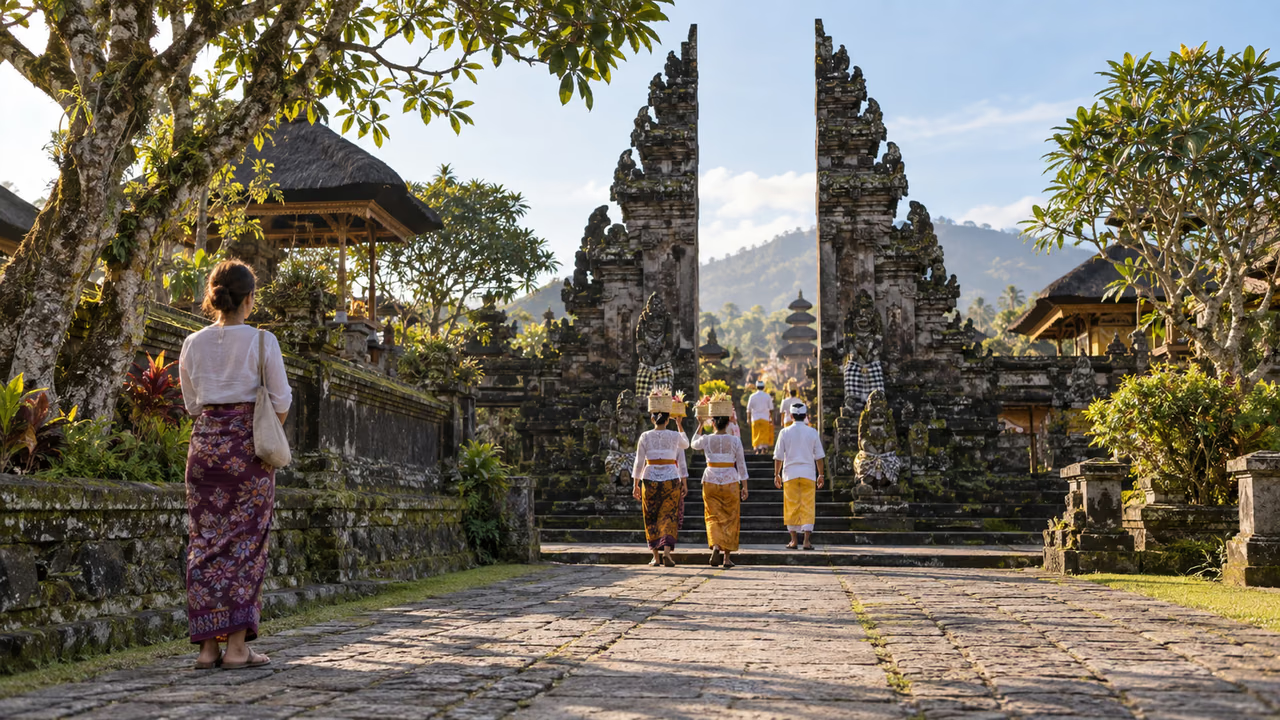
You can often observe Balinese Hindu ceremonies respectfully, but a temple is first a place of worship. Access depends on the temple, the ceremony, and the area you want to enter. Check the local rules before going, and treat an invitation to observe as different from permission to join a ritual.
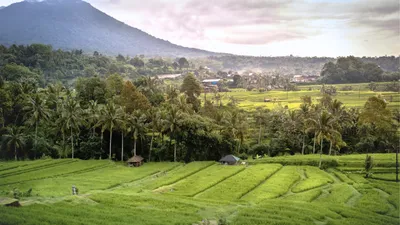
I have come across ceremonies while traveling, rather than setting out to attend one. In Bedugul, I filmed from a distance, asked permission before filming individuals, and did not interrupt the procession. I have not joined a ceremony as a participant.
What to expect
Balinese temples, or pura, are active religious places. Ceremonies may mark temple anniversaries (odalan), calendar observances such as Galungan and Kuningan, or family and community events. A ceremony’s date, sequence, dress, and visitor access are set locally. There is no single visitor schedule or universal ceremony etiquette that applies at every temple.
The Bali provincial government’s 2025 guidance tells foreign visitors to respect temple sanctity, ceremonies, local customs, and site-specific rules. It restricts entry to certain sacred temple zones to people attending worship in Balinese attire, and also states a menstruation-related restriction for sacred areas. Check the rule with the site or a licensed local guide before your visit. Do not assume that a general admission ticket gives access to every courtyard or ceremony.
Observe without disrupting worship
- Follow posted signs and instructions from temple staff, priests, and your licensed guide.
- Stay in visitor areas unless you are explicitly directed elsewhere.
- Keep your voice low and leave space for worshippers and processions.
- Do not touch offerings, ritual objects, or people. Wait for an invitation before taking part in any activity.
- Ask before photographing or filming individuals. Avoid recording prayer or ritual activity unless the site permits it.
- Do not climb on temple structures or block paths for a photograph.
At Bedugul, I kept my distance and asked before filming individuals. If you cannot tell whether filming is welcome, put the camera away and ask a temple representative.
Clothing and practical preparation
Wear modest clothing and follow the site’s specific dress requirements. Shorts may be barred in some temple areas. A sarong can often be rented at an entrance, but availability and rules vary; ask before relying on a rental. Do not assume every temple requires or provides the same clothing.
Before setting out, check:
- Whether visitors may enter that day and which areas are open.
- Whether a ceremony is taking place and whether visitors may observe it.
- Dress rules, any restrictions for sacred zones, and photography rules.
- Current opening hours, entry fees, and whether a licensed guide is required.
Bali’s 2025 guidance says foreign tourists should be accompanied by a licensed guide when visiting tourist attractions. Confirm how that requirement applies to the particular temple and visit you are planning. Carry small rupiah notes if the temple or site uses cash, but do not assume there is a fixed donation amount.
Choosing a temple visit
Well-known sites such as Tanah Lot, Uluwatu, Besakih, Goa Gajah, and Tirta Empul have different access arrangements and visitor facilities. Some are also attractions with ticketing, while others may be active local temples with limited visitor access. Opening times, ceremony dates, performance schedules, ticket prices, and restricted areas can change. Check the official site or local authority close to your visit.
At Uluwatu, check the current Kecak performance schedule and ticket arrangements separately from temple access. At water temples such as Tirta Empul, do not copy another visitor’s bathing sequence: sacred water rituals have site-specific instructions, and some spouts are reserved for particular rites. Ask a temple representative or your guide.
If a ceremony is private or a sacred area is restricted, respect that boundary. You can still learn from the temple’s public spaces, an approved guide, or a cultural institution without treating worship as a performance.
A note on ceremony dates
Balinese ceremonial dates follow local religious calendars, and the event you see may not occur on the same date each year. If you are planning a Q4 2026 visit, verify dates and visitor access with the temple, village, or local tourism authority shortly before traveling. Avoid promising that a particular ceremony will be happening on a given day without direct confirmation.