
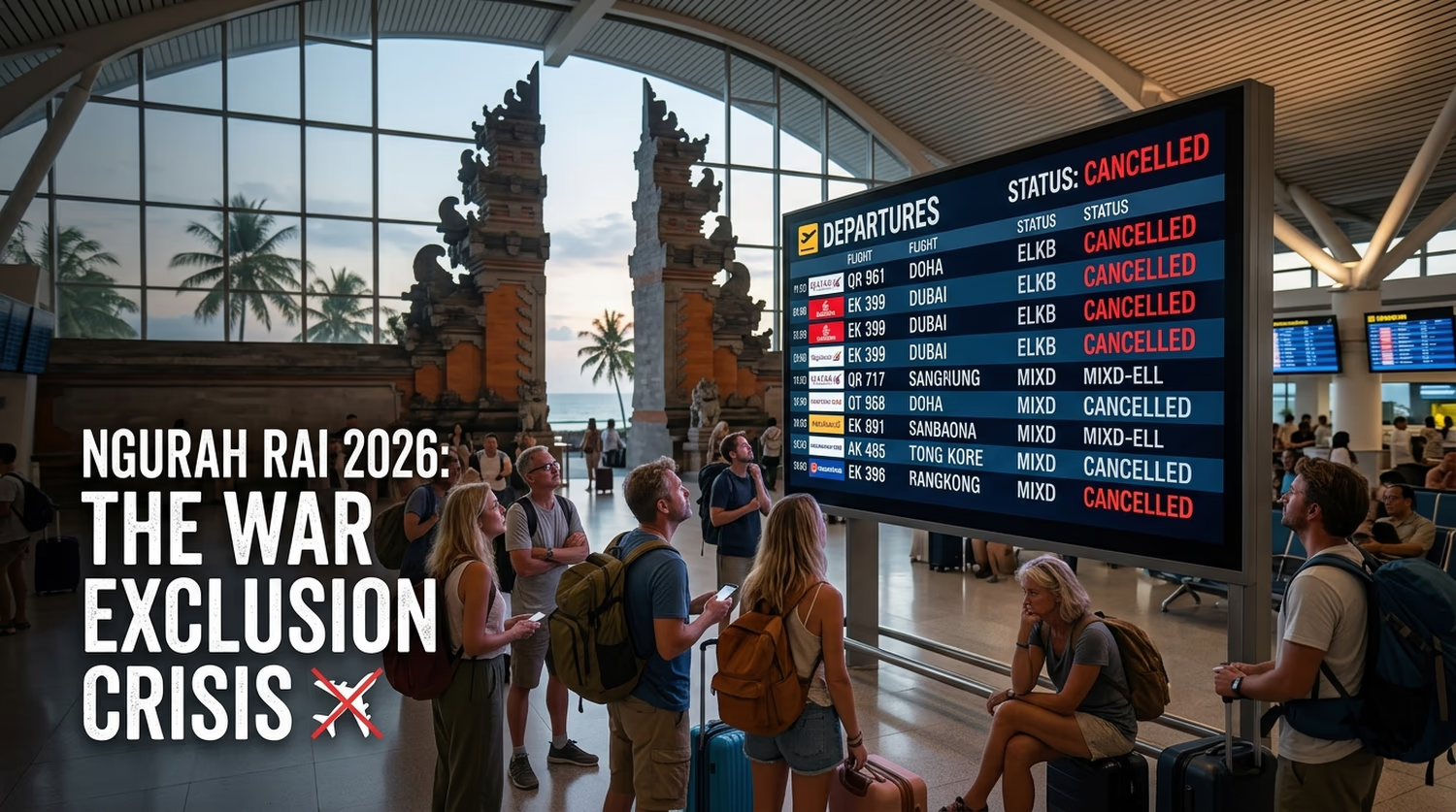
In March 2026, travelers stuck at Ngurah Rai Airport in Bali found themselves staring at cancelled departure boards. Qatar Airways and Emirates had suspended flights after regional strikes shut down Middle East airspace: for those without the right insurance, it was an expensive lesson.
That experience put one question front and center for anyone planning a Bali trip: does my travel insurance actually cover war-related disruptions?
The short answer is: probably not, unless you read the fine print before you bought it. Here’s the full picture.
TL;DR: The At-a-Glance Guide
For the experienced traveler, here are the immediate takeaways from the March 2026 crisis:
- Standard policies do not cover war. Policies explicitly exclude acts of war, military action, and government airspace closures.
- Airlines, not insurance, handle cancelled flights. If an airline cancels due to airspace closure, consumer law requires them to refund you first.
- You need proof, not fear. A formal government “Do Not Travel” order triggers interruption benefits; a generic fear does not.
- SafetyWing requires immediate action. Their political evacuation benefit has a mandatory 10-day condition. You must leave within 10 days of a formal advisory.
Is Bali Currently Safe to Travel To?
Yes. Bali itself is not a conflict zone. The disruptions in early 2026 hit travelers in transit through Middle Eastern hubs. The island remains stable, and major governments have no active travel advisories for Indonesia as of April 2026.
For a complete safety overview, see our Solo Safety in Bali guide.
That said, Bali has its own category of risks that make extensive research and robust coverage essential:
- Motorbike and scooter accidents: the leading cause of tourist injury on the island.
- Bali belly: food poisoning that can land you in a private clinic fast.
- Volcanic activity: Mount Agung and Batur can affect flights and accommodation with ash clouds.
- Astronomical medical costs: serious injury requiring evacuation to Jakarta or Singapore can exceed $30,000.
War coverage is relevant only for routing through affected regions. But medical and activity coverage? That applies to every visitor.
Why Standard Policies Fall Short on War Coverage
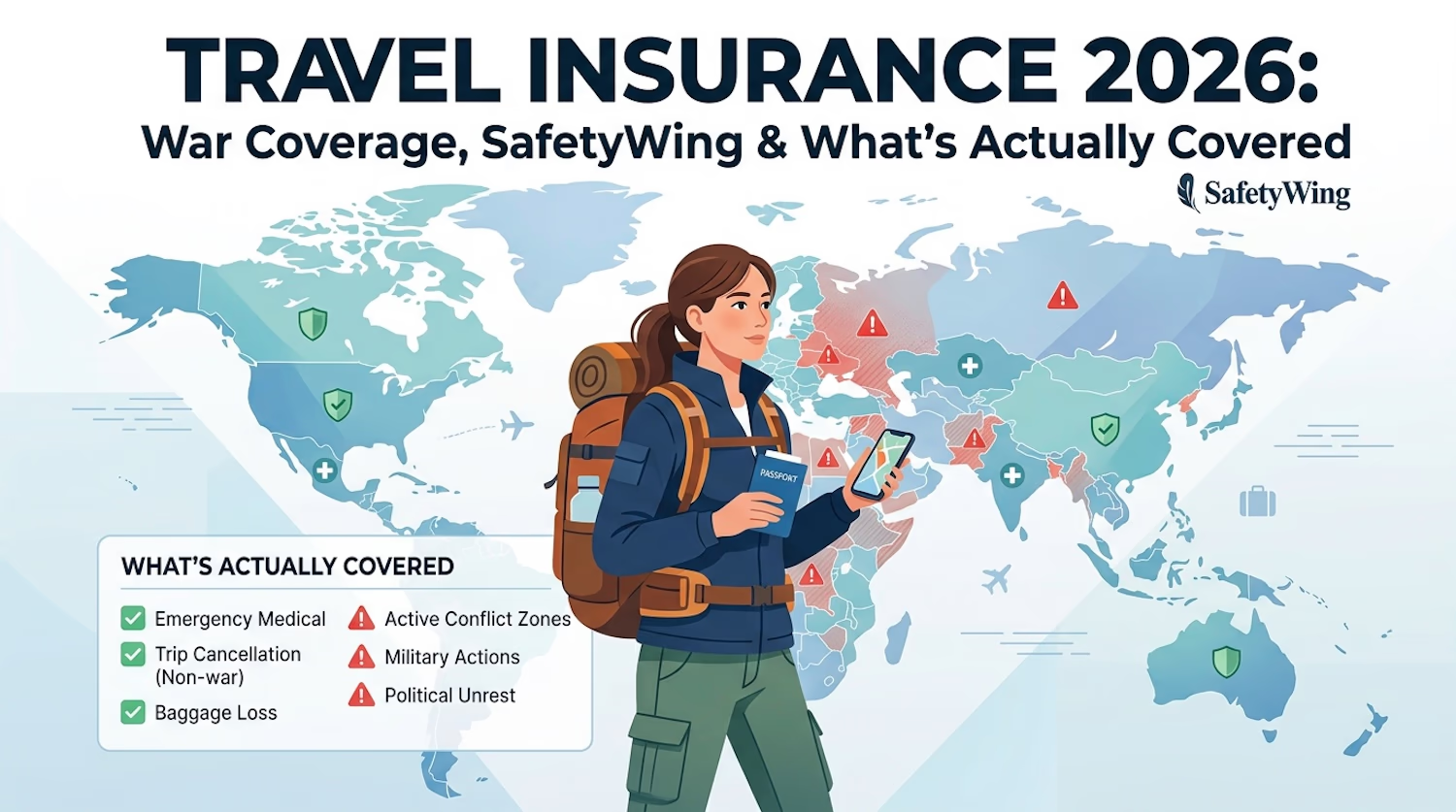
Here is the strategic information most travelers miss: standard travel insurance explicitly excludes losses caused by acts of war, military action, and government airspace closures.
This was confirmed bluntly by experts during the March 2026 crisis. If your flight was cancelled because airlines were barred from flying through affected airspace, standard base policies will not reimburse your connection fees, rebooking, or accommodation costs while you wait.
There are two critical exceptions:
- Airline-initiated cancellations: Airlines are legally required to refund you if they cancel. That is consumer protection law. Get your refund from the airline first.
- Government “Do Not Travel” orders: Some policies activate trip interruption benefits only when a formal advisory is issued. Fear of travel does not trigger coverage; an official order does.
The imperative: buy insurance before a crisis becomes newsworthy. Once an event is known, insurers treat it as a “foreseen” event and exclude it from new policies.
What SafetyWing Actually Covers
SafetyWing’s Nomad Insurance (Essential plan) is built for long-term travelers and digital nomads, not two-week package tourists. This distinction directly impacts how the coverage works.
Medical and Evacuation Limits
- $250,000 USD medical coverage maximum per policy period ($100,000 for ages 65–69).
- $100,000 USD medical evacuation lifetime maximum.
- $10,000 USD political evacuation lifetime maximum.
- $250 USD deductible per certificate period — applies to most medical claims. Emergency dental and travel delay benefits are exempt from the deductible.
The $10,000 political evacuation benefit is real, but it has a crucial condition: you must leave the affected area within 10 days since the start of a formal travel warning being issued. If you stay longer, the benefit will not apply.This is a critical distinction for the experienced traveler—waiting for the “perfect time” to leave could void your coverage entirely.
Travel Benefits (Essential Plan)
| Benefit | Coverage Amount | Notes |
|---|---|---|
| Trip Interruption | Up to $5,000 | — |
| Trip Delay (after 12 hrs) | $100/day, max 2 days = $200 | Requires unplanned overnight stay; no deductible |
| Lost Checked Luggage | Up to $3,000 per period | $500 per item cap; $6,000 lifetime limit |
| Natural Disaster Accommodation | $100/day for up to 5 days | No deductible |
| Political Evacuation | Up to $10,000 lifetime | No deductible |
| Travel Accident / AD&D | Up to $25,000 | — |
| Emergency Dental | Up to $1,000 | No deductible |
Pricing
- Ages 10–39: ~$56 per 4 weeks (Essential)
- Ages 40–49: ~$92 per 4 weeks (Essential)
- Complete plan: 12-month commitment; adds wellness, dental, mental health coverage, and 175+ country coverage.
Pro-Tip for the Long-Term Traveler: While the Essential plan is budget-friendly, the SafetyWing Complete plan is the “splurge” choice for those who value total peace of mind. The biggest advantage? It features a $0 deductible. Instead of paying the first $250 of a claim yourself, Complete covers you from dollar one, while also adding wellness and dental benefits. If you’re planning a 6+ month stint in Bali, the lack of a deductible often pays for the price difference in just one clinic visit.


Travel freely, we've got you covered
Nomad insurance for solo travelers
Protected in 180+ countries
What SafetyWing Does NOT Cover
Be honest with yourself about these gaps before committing:
War and active conflict participation: Coverage will not extend if you are physically inside a war zone. The political benefit is for evacuating from unrest, not sustained conflict exposure.
Fear-based cancellation: Deciding not to travel because you are worried is not a covered reason. An actual service cancellation or formal government order is.
Adventure sports (base plan): Surfing, diving, volcano trekking, and motorbike riding are not covered under the base Essential plan. You must add the adventure sports rider — this is non-negotiable for most Bali trips.
Work-related accidents: If you are injured performing specific job duties (not just working remotely on a laptop), it is excluded.
Pre-existing conditions: Only acute onset is covered, up to $10,000. Chronic conditions are not covered under the Essential plan.
Bali-Specific Coverage Priorities
1. Motorbike and Scooter Coverage
Mandatory. Most tourist injuries in Bali involve motorbikes. You must hold a valid motorcycle license in your home country (or an Indonesian equivalent) and wear a helmet. No helmet means voided coverage. SafetyWing covers standard motorbike accidents when these conditions are met.
2. Medical Evacuation
Serious trauma cases are often evacuated to Singapore. Costs can reach $50,000 without insurance. SafetyWing’s $100,000 evacuation lifetime maximum handles this scenario well.
3. Dive and Surfing Accidents
Planning to dive Nusa Penida, Tulamben, or surf Uluwatu? Add the Adventure Sports rider. SafetyWing covers recreational scuba diving up to 30 meters with the rider active.
4. Volcanic Disruption
This is where SafetyWing has a directly useful benefit most articles miss. If Mount Agung or Batur erupts and forces you out of your accommodation, the Natural Disaster benefit covers $100/day for up to 5 days toward a new place to stay — with no deductible. If ash clouds cancel your flight, check whether the eruption qualifies as a “known event” based on when you bought the policy. Buy early to avoid this exclusion.
Comparison: SafetyWing vs. Alternatives for Bali
| Feature | SafetyWing Essential | SafetyWing Complete | World Nomads |
|---|---|---|---|
| Best For | Budget/Short-term | Long-term/Premium | Adventure/Gear |
| Medical Limit | $250,000 | $1,000,000 | $100,000 |
| Deductible | $250 | $0 | Varies |
| Wellness/Dental | No | Yes | No |
| Adventure Sports | Optional add-on | Optional add-on | Included |
| Political Evac. | $10,000 | $10,000 | Limited |
| Buy Mid-Trip? | Yes | Yes | No |
The “Splurge” Strategy: Why “Complete” Often Costs Less in the Long Run
If you fall into the category of travelers who prefer to pay a bit more upfront to avoid headaches later, the SafetyWing Complete plan is the logical choice. While the monthly premium is higher, it removes the $250 deductible.
In Bali, a standard visit to a private clinic for “Bali Belly” or a minor infection often costs between $150 and $300. On the Essential plan, you would pay that entire bill out of pocket. On the Complete plan, because the deductible is $0, the insurance picks up the tab immediately. For a professional traveler with a higher income, the peace of mind knowing every clinic visit is covered from the first dollar is usually worth the upgrade.
The best part? Both plans retain SafetyWing’s signature flexibility. You can buy mid-trip if you have already arrived in Bali. The subscription model also means you are not locked into predicting exact travel dates.
Connectivity: Airalo eSIM
You cannot manage travel insurance claims, check government advisories, or coordinate emergencies without reliable data. An eSIM is the fastest way to get online on arrival.
Stay connected with an Airalo eSIM (Coupon Code: WANDOPIA for 10% off). The Asia eSIM covers all of Southeast Asia, including Indonesia — no physical SIM swap required. For a detailed breakdown of connectivity options in Bali, including local SIM cards and Wi-Fi tips, see our SIM Card & Internet in Bali guide.
The Real Talk: Is SafetyWing Worth It for Bali?
For most solo travelers visiting Bali for 2–8 weeks: yes, but only with the adventure sports add-on.
It is not the most comprehensive policy, and the claim process has drawn criticism in early 2026. But for the price point and Bali’s actual risk profile, the coverage is solid.
The riders to know:
- Add Adventure Sports: mandatory for motorbikes and diving.
- Add Electronics: for your laptop and camera (Complete plan).
- Buy before a known event — not after it hits the news.
How to Buy SafetyWing for Bali
- Go to SafetyWing’s Nomad Insurance page.
- Enter your nationality and destination (Indonesia).
- Add the Adventure Sports rider for typical Bali activities.
- Coverage starts the next day if you are already traveling.
Quick Checklist Before You Buy
- Motorbike and scooter coverage confirmed (check license and helmet requirements).
- Medical evacuation limit sufficient ($100,000+ lifetime).
- Adventure activities — diving, surfing — covered via the sports rider.
- Political evacuation 10-day rule understood.
- Natural disaster accommodation benefit noted ($100/day × 5 days, no deductible).
- Deductible noted ($250 per certificate period for SafetyWing Essential).
- Buy mid-trip or extension flexibility confirmed.
Bottom Line
War coverage is a moving target. The March 2026 disruptions exposed standard policy limitations for travelers routed through the Middle East. For Bali specifically, the biggest risks remain medical — scooters, diving, stomach illness, and volcanic activity. SafetyWing handles this profile well at a competitive price. Add the adventure sports rider, account for the $250 deductible, and buy before leaving.
Need quick access to emergency numbers on the island? Save our Emergency Contacts in Bali guide before you travel.